Weeks 1-3:
Experimentation using p5.js
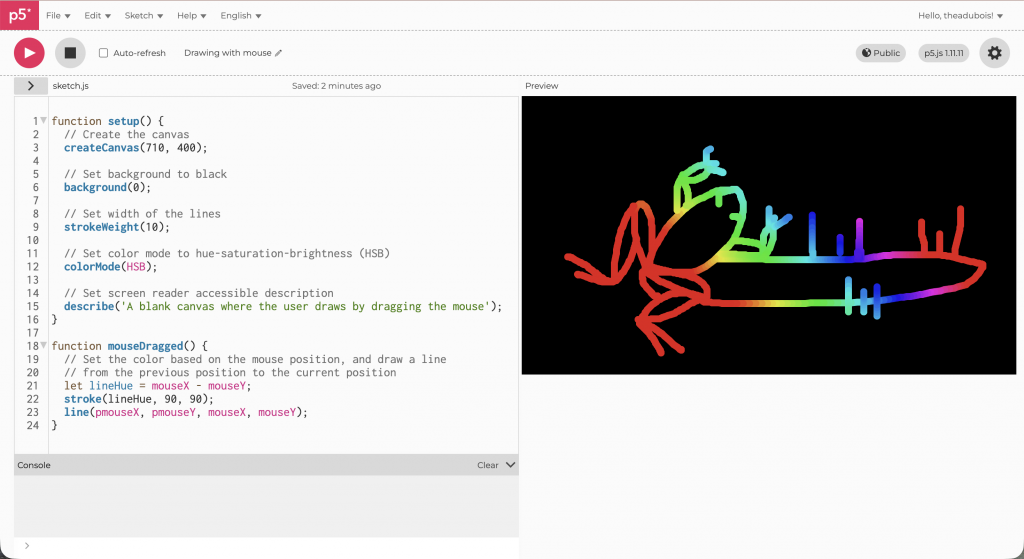
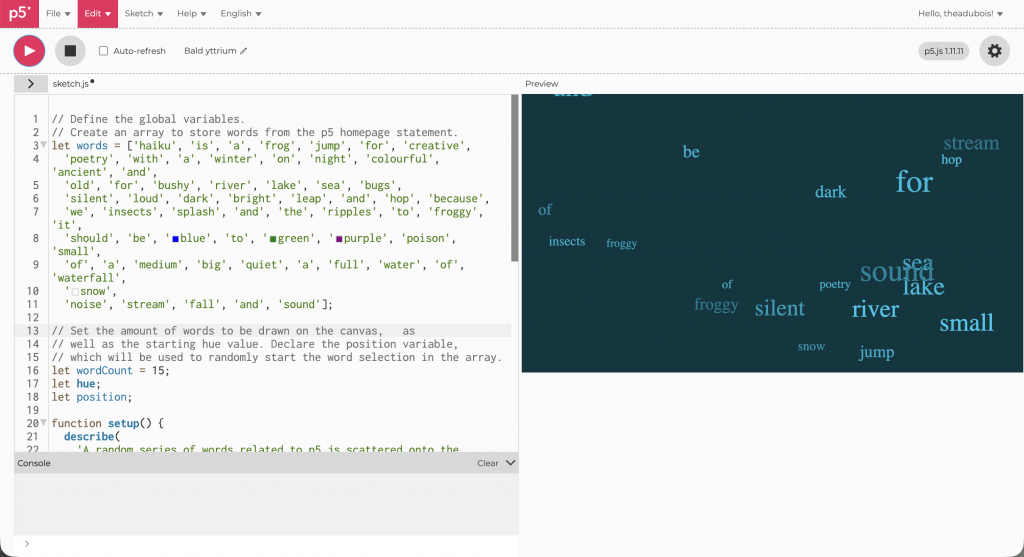
Mock-ups of potential directions the project could take using Figma.
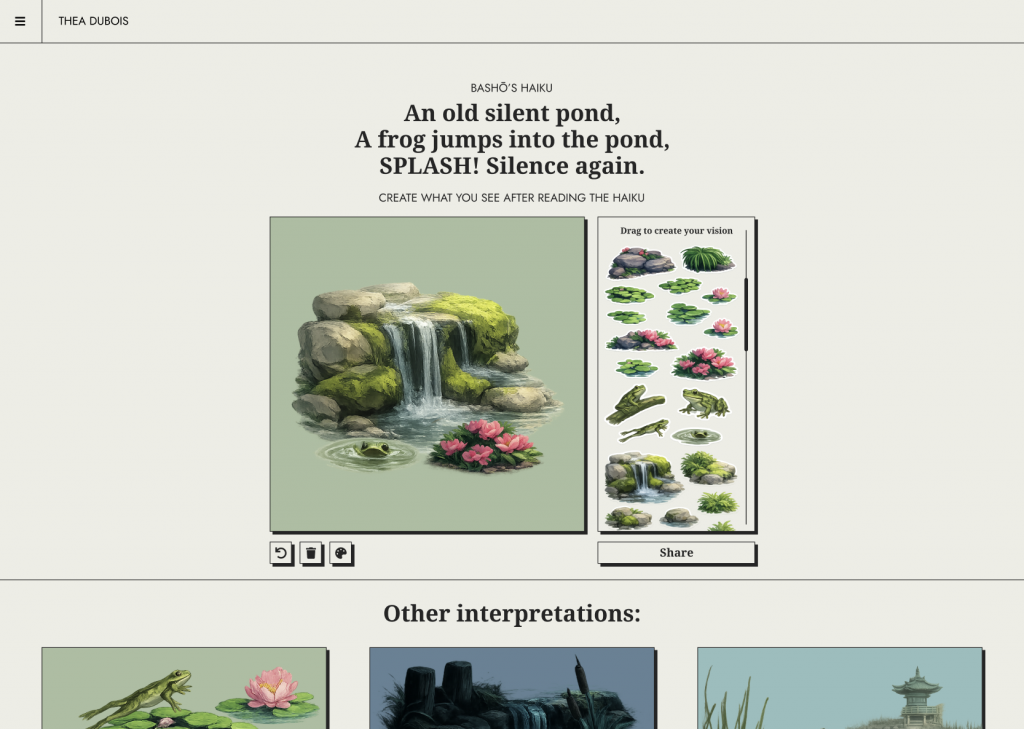
As my system developed, it began to resemble AI image-generation.
I decided to resist this path of AI generation. Every visual element in my system comes from my own drawings by building a database of images that the system takes from. The code provides structure, but the visual language remains authored.
Weeks 4-6:
Progress Points
1. Authored Visual Dataset
I will produce a growing library of abstract visual assets (lines, textures, tonal fields, shapes) informed by memory, atmosphere, and material experimentation. These assets are categorised manually (stillness, movement, density, temperature) and form the visual vocabulary of the system.
2. Rule-Based Translation System
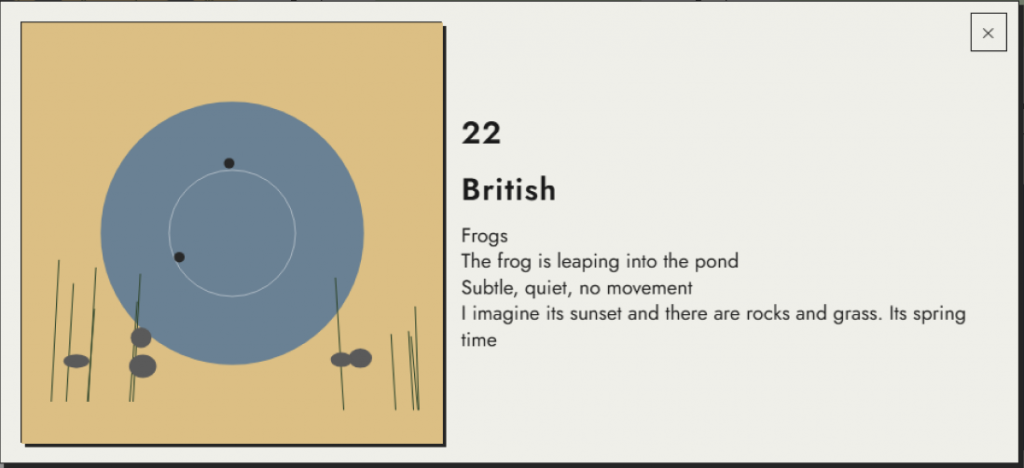
Participants submit short written perceptions of the haiku. The system parses keywords and descriptive qualities, then assembles images using predefined rules that determine composition, layering, opacity, and spatial rhythm. The system is coded by me and does not rely on AI image generation, allowing me to critically engage with questions of automation, authorship, and control.
3. Public Archive
Each generated image is stored alongside the participant’s written description (and minimal contextual data, such as name or age). The archive grows over time, visualising multiplicity through accumulation rather than variation within a single image.
Mock-up of the prototype for user testing with the audience in MAGCD studios.
User testing revealed some limitations of my mockup:
- Users lacked context about the project, therefore providing very little motivation to engage with the project.
- The project does not provide much interaction or reward for the user to want to participate in the project.
- My code is not developed enough with the asset library and keywords to generate variable outcomes.
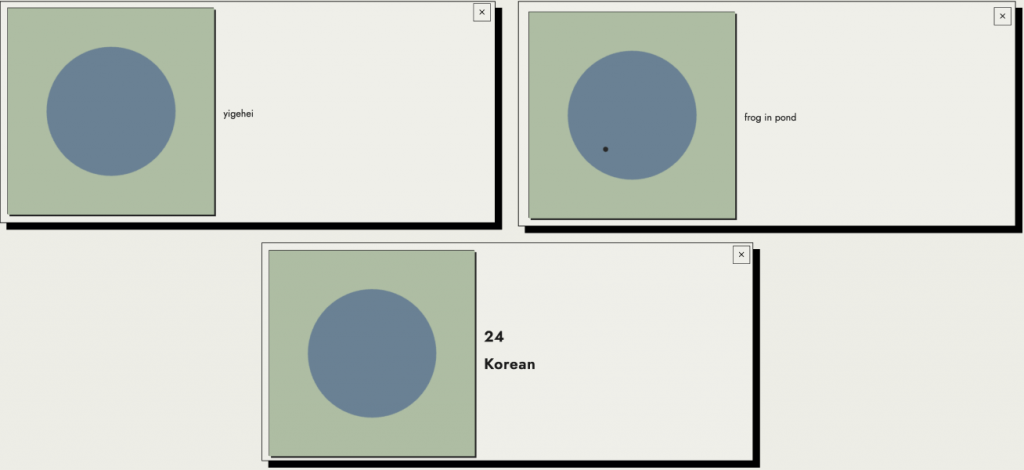
I started iterating on the prompt box, exploring the different ways I could guide the user to create more detailed descriptions of the poem in order to create more variable outcomes. The key issue to avoid here is guiding the user too much, introducing bias in their interpretation.
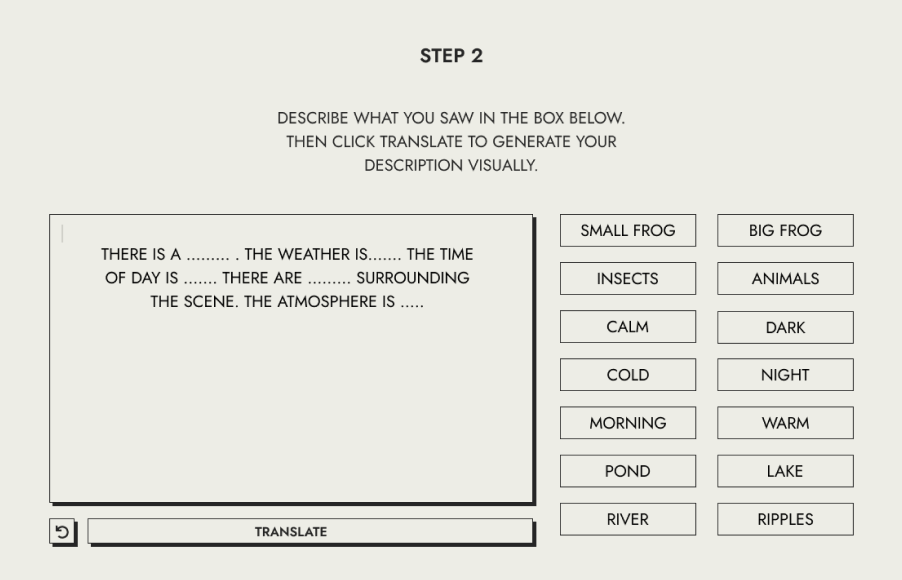
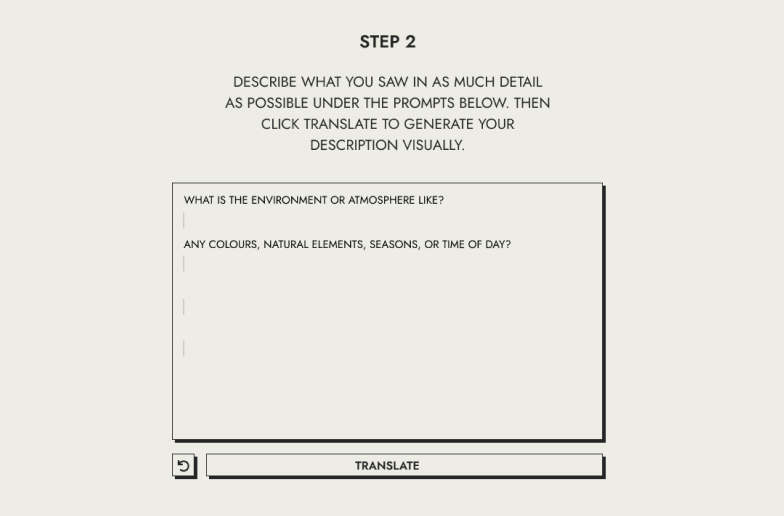
I decided to use this iteration for the website, as it offered the user guiding questions without telling them what to see.
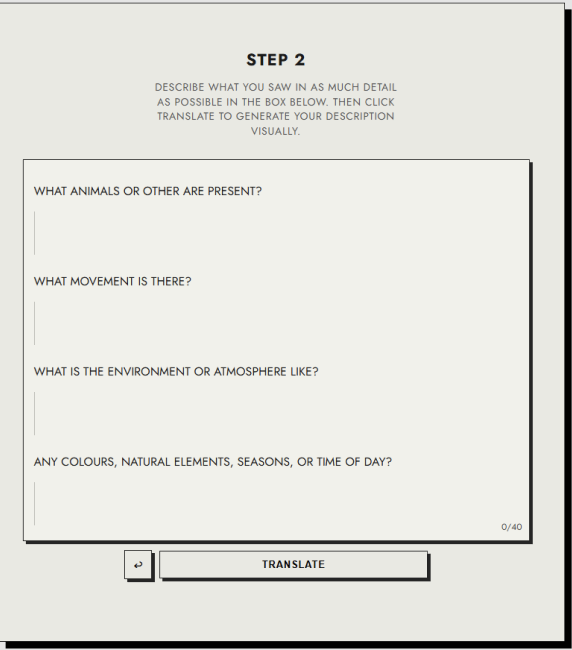
The outcome from this testing resulted in a more variable output from users.
Leave a Reply